Sunday, October 13, 2019

ANTENNA

As the developed of electronics increased in recent years, scientists and engineers have found a way to eliminate the use of traditional antennas such as Yagi antenna,Rabbit ear antenna etc.But the antennas aren't going anywhere,they are replaced by new technologies.Although antennas are generally considered to be outdated, telecommunication  companies are finding ways to innovate the antenna for next generation of electronics. As antennas are smaller, lighter,and more powerful than ever before they are used in wide areas such as 3D printers and manufacturing technique.
                                              
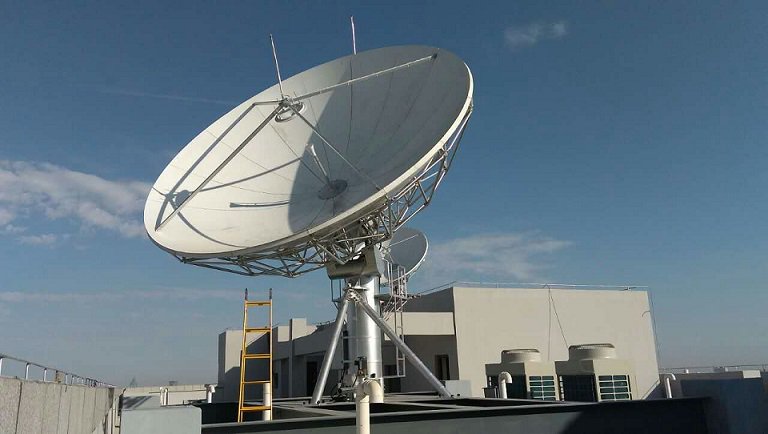
An antenna is a transducer that changes over radio frequency (RF) fields into alternating current or the other way around. There are both receiving and transmission antennas for sending or accepting radio transmissions. Antennas assume a significant job in the activity of all radio hardware. They are utilized in remote networks, portable communication and satellite correspondence.


                                  Related image

They are arranged with metallic conductors where the electrical connection are given to the receivers and transmitters. Current is passed through these conductors and an alternating magnetic field is created.They induce voltage to the antenna.The magnetic field is coupled with similar oscillating electric field.It allows electromagnetic waves for propagation.

WHY DO WE NEED ANTENNAS?


There are several reason for using these antennas but the important reason is to provide a simple way to transfer signals when other methods are impossible.Working of any wireless device requires transmitting and receiving signals(or data) this is only possible with the use of antennas.There are many situation in which cables are preferred over wireless communication with antennas(like high speed Ethernet or the connection between gaming console and the T.V., for example).  

Stay tuned to learn about the types of antennas which will be posted next week.

Wednesday, October 2, 2019

Radio Frequency

RADIO FREQUENCY

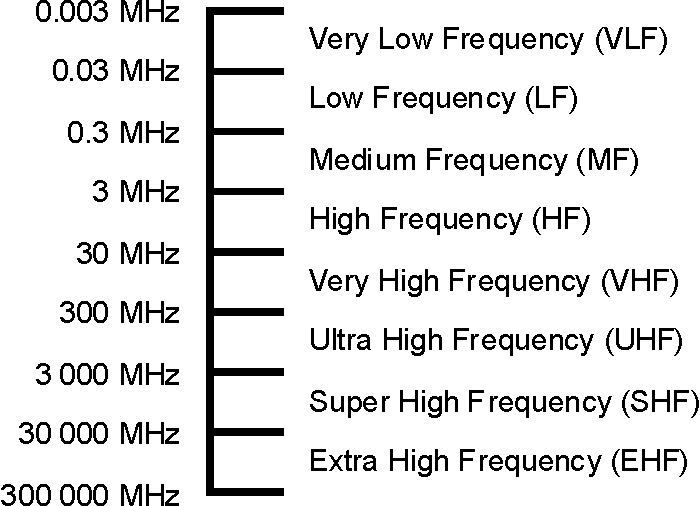
Radio frequency is the activity representing the oscillation rate of  electromagnetic radiation spectrum, electromagnetic radio waves, from frequencies starting from 300GHz to as low as 9kHzRadio frequency is measured in units called hertz, which represent the number of cycles per second when a radio wave is transmitted. One hertz equals one cycle per second. The unit Hertz is named in honor of the 19th-century German physicist Heinrich Rudolf Hertz.  With the utilization of antennas and transmitters, an RF field can be used for various types of wireless broadcasting and communications.


When it involves choosing  the right radio, the difficult task is to choose the right bandwidth to be utilizedthe 2 major wavelengths used for communications are VHF (Very High Frequency) and ultrahigh frequency (Ultra High Frequency).

Image result for vhf radio range

VHF

VHF’s frequency range is from 30 MHz to 300 MHz. VHF has 10 times longer wavelength. This means the waves are longer with VHF therefore it travels further. The VHF radio band specifically for commercial radios is between 130 -174 MHz. If you're operating largely outdoors, a VHF radio maybe the most effective selectionparticularly if you are employing a base station radio inside and you add the external antenna. The higher you can place the antenna, the further you can transmit and receive.VHF radios also have a smaller number of available frequencies.One benefit of VHF wireless radios is that battery life is almost always better than for similar UHF units. For handheld radios this is a plus.The VHF band is used for two-way radio communication. a good deal of satellite communication and broadcasting is done at VHF.

                               
                                    Image result for ultra high frequency

VHF waves, not like longer waves, are not strongly reflected from the atmosphere; thereforethey don't bend  round the Earth’s curvature and cannot  be transmitted beyond the horizon. VHF waves are  restricted to use in short-range, line-of-sight communications, together with radio and television broadcasting, and in electronic navigation systems.

UHF


Ultra high frequency (UHF) refers to the band of  electromagnetic radiation with a frequency varying  between 300 MHz and 3GHz. This band is also called as the decimetre band, with a wavelength starting from 1 m to dm. UHF is used for data transmission with shorter wavelength and high frequency. Since the size of antenna is directly proportional to the size of the waves, the antennas for UHF are short and stout. Higher the frequency band lower the size of antenna.The broadcast range is shorter than VHF.


UHF is used in two-way navigation, wireless local area network and communications, radio and security systems.

For example,  When you’re in an area with lots of small obstacles, such as a circle track or stadium race where there’s lots of people, you’re going to need a signal that can travel in between gaps of those obstacles to the receiver you’re talking with. This is where UHF signal will provide a greater range because of the smaller waves. VHF is suitable for wide range, but in this case UHF is used for better transmission quality.


Friday, September 27, 2019

A HAM is an amateur radio, it is a wireless communication technology. It brings people, electronics and communication together. Radio amateurs have access to frequency allocations throughout the RF spectrum. This enables communication across a town, region, country, continent, the world, all without the Internet or cell phones. It's fun, social, educational, and can be a lifeline during times of need. Amateur radio operators are known as technical innovators, and have been responsible for important discoveries. In several countries, amateur radio operators may additionally send, receive, or relay radio communications between computers or transceivers connected to secure virtual private networks on the web. A HAM Radio station can be set up anywhere, at club station or even at home. To operate on radio frequencies one should pass the examination conducted by the FCC(Federal Communications Commission). Amateur Communication is done on various bands from 1.8 MHz to several hundred gigahertz.


HAM Club of KCT

The HAM Club of KCT was inaugurated on 4th October 2018. The logo of the club was launched on the same day. Since then several events were conducted. Workshops entitled Radio For Everybody was held on 4th Feb 2019 and during Yugam 2019 Events such as HAM Horror Hunt, Fox Hunt and Walk with Walkie were conducted during 7th,8th and 9th February.


The Club Incharge Mr.Karthikeyan led the HAM relief operation for Gaja Cyclone at Karaikal. The real heroes faced a lot of hurdles but the need to help kept them going. 

HAM LENS

HAM Lens is an event with innovative questions to tackle your interest and curiosity about disaster and rescue measures. It was a good platform for the participants to bring out their communication skills, Puzzle solving skills and Social awareness. At first the participants were divided into teams, the host of the event explained them the usage on working of HAM. The team of two students were asked to pick a virtual situation randomly and they were made to communicate through HAM.
                                   

The event was entertaining and informative. It gave a clear idea to act during critical situations and made the participants realize their level of communication and logical thinking.